Email: info@BSBortho.com

Chronic Exertional Compartment Syndrome (CECS) is a common cause of exercise-induced leg pain, particularly in runners, military personnel, field athletes, and other active individuals. The condition occurs when pressure builds within one or more muscle compartments during activity, limiting blood flow and compressing nerves and muscles.
Common symptoms include:
The anterior compartment is most commonly affected, followed by the lateral, deep posterior, and superficial posterior compartments. Learn more about CECS here.
Many conditions can mimic CECS, including:
At Boston Sports & Biologics, evaluation includes:
Compartment pressure testing remains the gold standard diagnostic procedure for CECS.
During this procedure:
Pressure testing allows identification of:
The procedure is performed in the office under local anesthesia and typically takes less than one hour.
For patients who fail conservative treatment and have confirmed CECS, ultrasound-guided fasciotomy offers a minimally invasive alternative to traditional surgery.
The fascia surrounding the affected muscle compartment is released through a small incision under continuous ultrasound visualization.
Using real-time ultrasound guidance allows:
Published cadaveric research demonstrated that ultrasound-guided fasciotomy can achieve release lengths comparable to traditional surgery without neurovascular injury.
Traditional compartment release surgery may require larger incisions, operating room time, and longer recovery periods.
Potential benefits of ultrasound-guided release include:
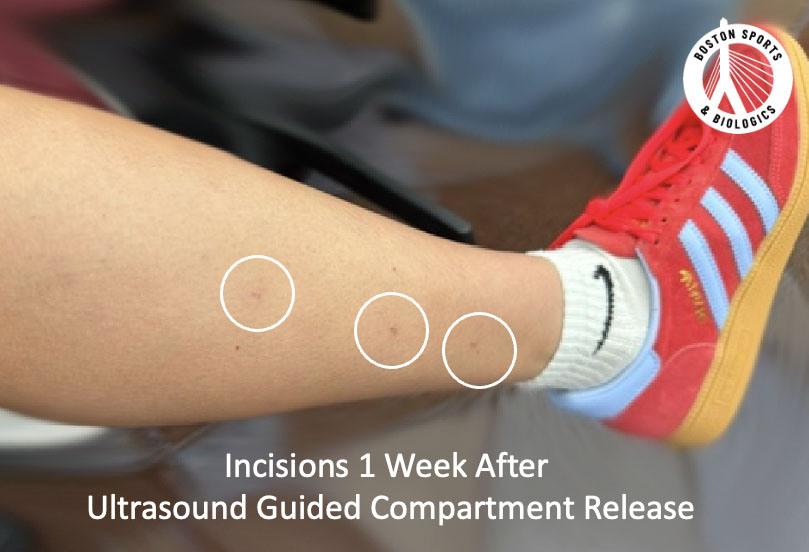
A multicenter study evaluating over 2,300 ultrasound-guided soft tissue surgical procedures reported an overall complication rate of only 1.2%, supporting the safety profile of these minimally invasive ultrasound-guided techniques.
Recovery varies depending on the compartments treated and activity goals, but most patients can expect:
You may be a candidate if you:
Boston Sports & Biologics specializes in:
Our goal is to accurately diagnose the source of your symptoms and
provide the least invasive treatment necessary to help you return to the
activities you enjoy.
If you are experiencing exercise-induced leg pain or have been told you may have chronic exertional compartment syndrome, contact Boston Sports & Biologics to learn whether compartment pressure testing or ultrasound-guided fasciotomy may be appropriate for you.
20 Walnut St, Suite #14
Wellesley MA
Ph: (781) 591 - 7855
Email: Info@bsbortho.com