Email: info@BSBortho.com

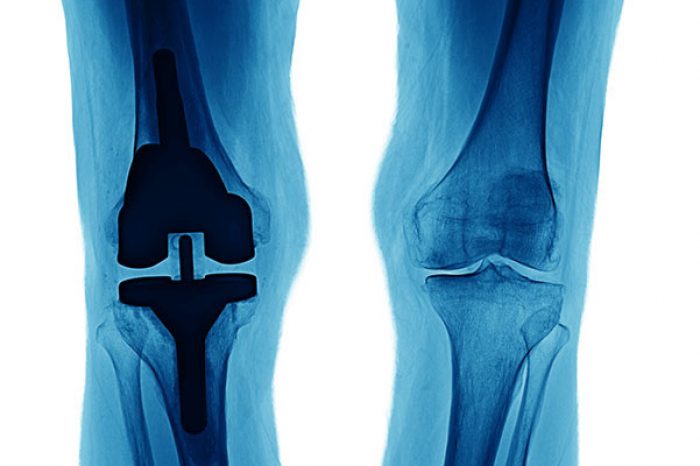
Regenerative medicine has become one of the fastest-growing areas in healthcare. Patients suffering from arthritis, tendon injuries, back pain, neuropathy, and other chronic conditions are increasingly exposed to advertisements promoting "stem cell" therapies derived from umbilical cord tissue, Wharton's Jelly, amniotic tissue, and exosomes.
Many of these products are marketed as cutting-edge biologic treatments capable of regenerating damaged tissue, reducing inflammation, and restoring function. However, the U.S. Food and Drug Administration (FDA) has repeatedly cautioned patients and physicians that many of these products are unapproved biologic drugs and that claims surrounding their effectiveness often exceed the available scientific evidence (U.S. Food and Drug Administration, 2024).
Understanding what these products actually contain, and what they do not contain is essential for patients making informed healthcare decisions.
Perinatal tissues, such as the human umbilical cord, have been the focus of considerable research. The human umbilical cord is a vital structure that connects the developing fetus to the placenta, serving as a lifeline for exchange of oxygen, nutrients, and waste products between the mother and the developing fetus.
The umbilical cord has outer covering comprising a layer of amniotic epithelium that encloses a mucoid connective tissue through which three vessels, a vein and two arteries, carry the oxygenated and deoxygenated blood between the placenta and fetus, respectively. Wharton’s jelly is the gelatinous connective tissue that supports the two umbilical arteries
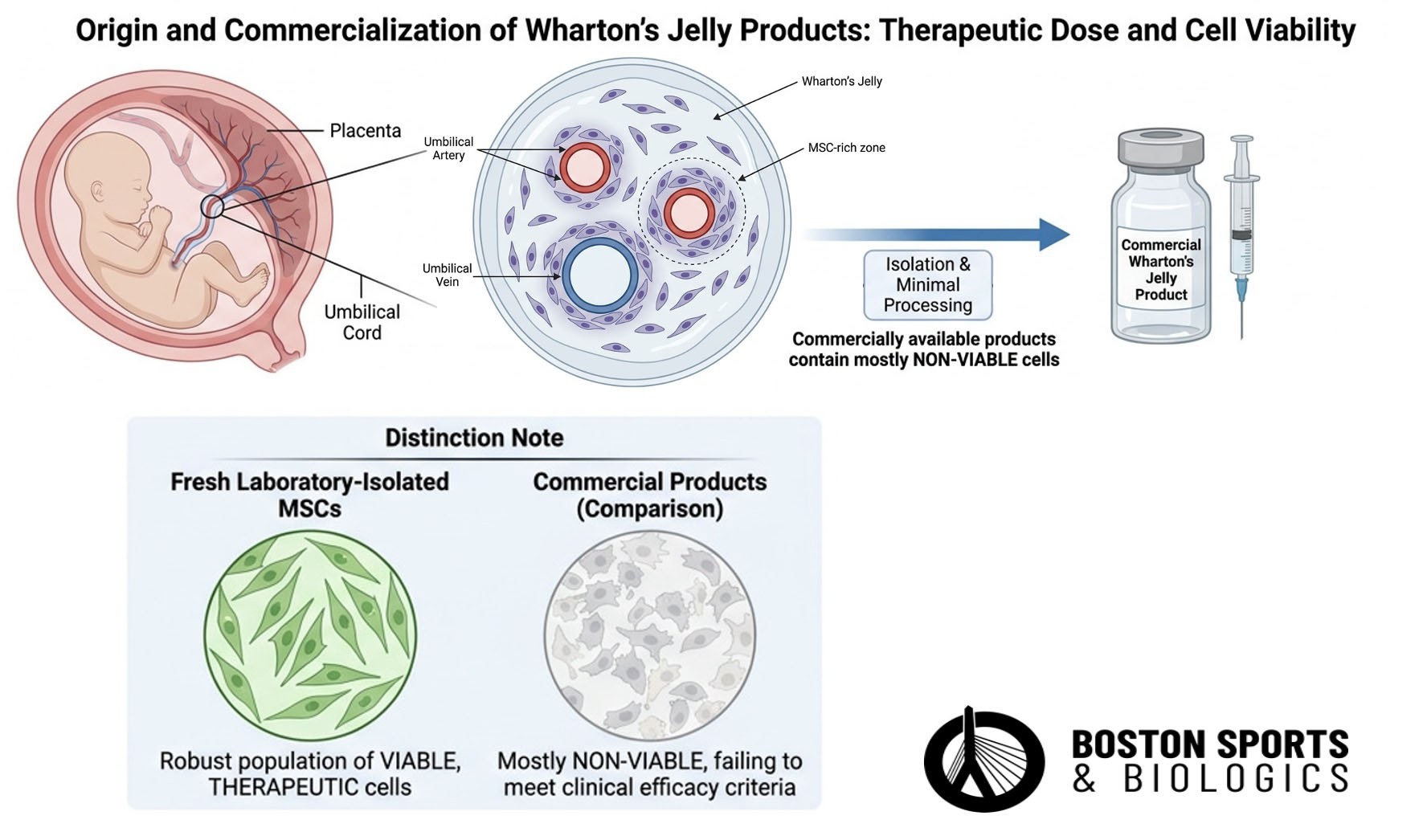
Wharton’s jelly was once viewed as a waste product to be discarded after birth, it has more recently been explored as a source of cellular and extracellular material for regenerative medicine applications. MSCs are present throughout the ECM of Wharton’s jelly but are particularly enriched in the perivascular region, which corresponds to the connective tissue immediately surrounding the umbilical cord arteries and vein. In its natural state, Wharton's Jelly contains:
Because of its biological composition, researchers have investigated Wharton's Jelly as a potential source of regenerative therapies.
A substantial number of US businesses market unapproved perinatal "stem cell" products directly to consumers, including Wharton's jelly-derived products (Turner et al, 2024).
However, an important distinction exists between fresh laboratory-isolated and expanded stem cells and commercially available Wharton's Jelly products offered in some clinics. While MSCs can be isolated from Wharton’s jelly, yields from fresh tissue are typically modest unless specific isolation methods and reagents are applied to release the cells, followed by in vitro expansion.
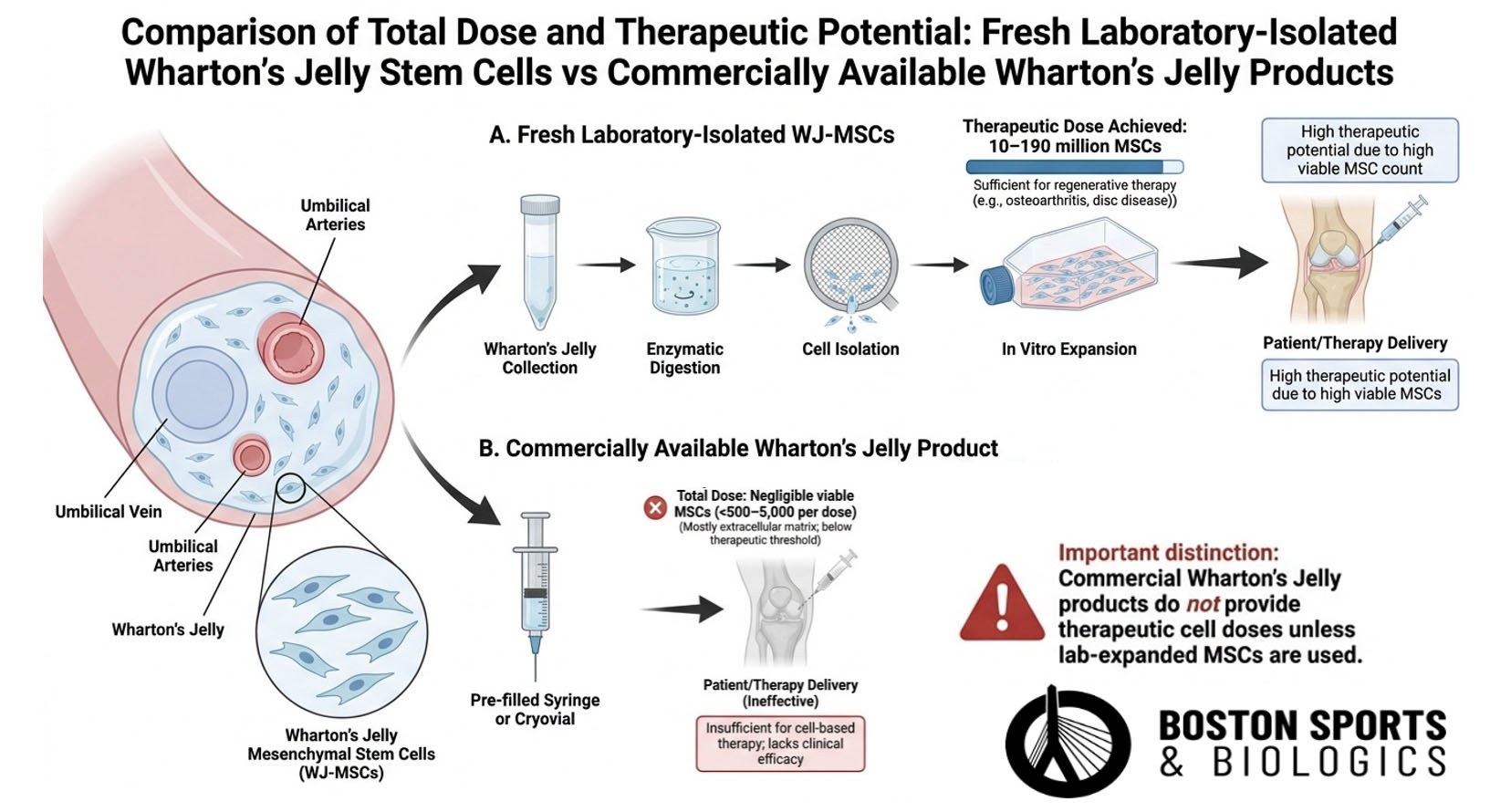
Fresh, unprocessed Wharton's jelly tissue yields relatively modest numbers of MSCs that require specific enzymatic or mechanical isolation methods followed by in vitro expansion to achieve clinically meaningful cell numbers.
Wharton’s jelly-derived biological products in the United State are typically supplied as cryogenically preserved viscous suspensionsor gels that are injectable or implantable. These products are sourced from full-term donated umbilical cords and are generally marketed as “minimally manipulated.” Minimal manipulation of tissue involves gentle, processing techniques such as mechanical dissociation and washing steps followed by cryopreservation, although it is not explicitly clarified whether these tissuefocused approaches also preserve resident MSCs.
Cryopreservation results in substantial loss of post-thaw cell viability and function by disrupting the cell membrane through multiple well-characterized biophysical mechanisms, (Shi et al, 2024; Wolkers et al, 2019; Ragoonanan et al, 2010) including:
The methods for minimally processing Wharton’s jelly ECM contrast with the mainstay approaches used in tissue engineering applications in which ECM is typically subjected to deliberate decellularization through chemical, enzymatic, and/or physical methods.
Standard isolation protocols require either enzymatic digestion using collagenases, trypsin, dispase, protease, and hyaluronidase, or explant culture methods, followed by in vitro expansion to achieve therapeutically relevant cell numbers (Arutyunyan et al, 2016).
Commercially available off-the-shelf Wharton's jelly products marketed as "stem cell" injections are largely unapproved by the FDA and may not contain viable, expanded MSCs comparable to those produced under rigorous laboratory or GMP conditions (Turner et al, 2024).
The FDA has issued multiple consumer alerts regarding regenerative medicine products, including:
The FDA's regulatory framework classifies birth tissue derived products that undergo more than minimal manipulation as biologic products requiring premarket approval under Section 351 of the Public Health Service Act (Marks & Gottlieb, 2018). Large-scale GMP-compliant manufacturing processes are necessary to generate sufficient quantities of mesenchymal stem cells for clinical applications (Soder et a, 2024).
According to the FDA, these products are not approved for the treatment of orthopedic conditions, neurologic disorders, autoimmune diseases, chronic pain, or anti-aging applications (U.S. Food and Drug Administration, 2024).
Documented adverse events, including bacterial infections from contaminated umbilical cord blood-derived products marketed as stem cell therapies, have been reported (Hartnett et a, 2021).
One of the most confusing aspects of regenerative medicine is that patients often hear very different messages about platelet-rich plasma (PRP), bone marrow aspirate concentrate (BMAC), microfragmented adipose tissue (MFAT), Wharton's Jelly, amniotic products, and exosomes. While these treatments are frequently grouped together under the umbrella of "regenerative medicine," the FDA regulates them differently.
The FDA's regulatory framework focuses heavily on two concepts: minimal manipulation and homologous use. In general, human tissue products may avoid being regulated as drugs or biologics if processing does not substantially alter their original characteristics (minimal manipulation) and if they are used for functions similar to those they perform naturally in the body (homologous use).
One of the most common misconceptions is that commercially available Wharton's Jelly injections contain large numbers of living stem cells.
A 2025 review published in the Journal of Translational Medicine evaluated commercially available minimally manipulated Wharton's Jelly products and found that they contained extremely low numbers of viable cells and virtually no clinically meaningful stem cell population (Marleau et al, 2026).
The authors reported:
This study demonstrate that commercial minimally manipulated Wharton’s jelly allografts are virtually devoid of viable cells.
The authors concluded that these products should be viewed primarily as extracellular matrix products rather than stem-cell therapies. They further stated that minimally manipulated Wharton's Jelly products lack sufficient viable stem cells to produce cell-mediated therapeutic effects.
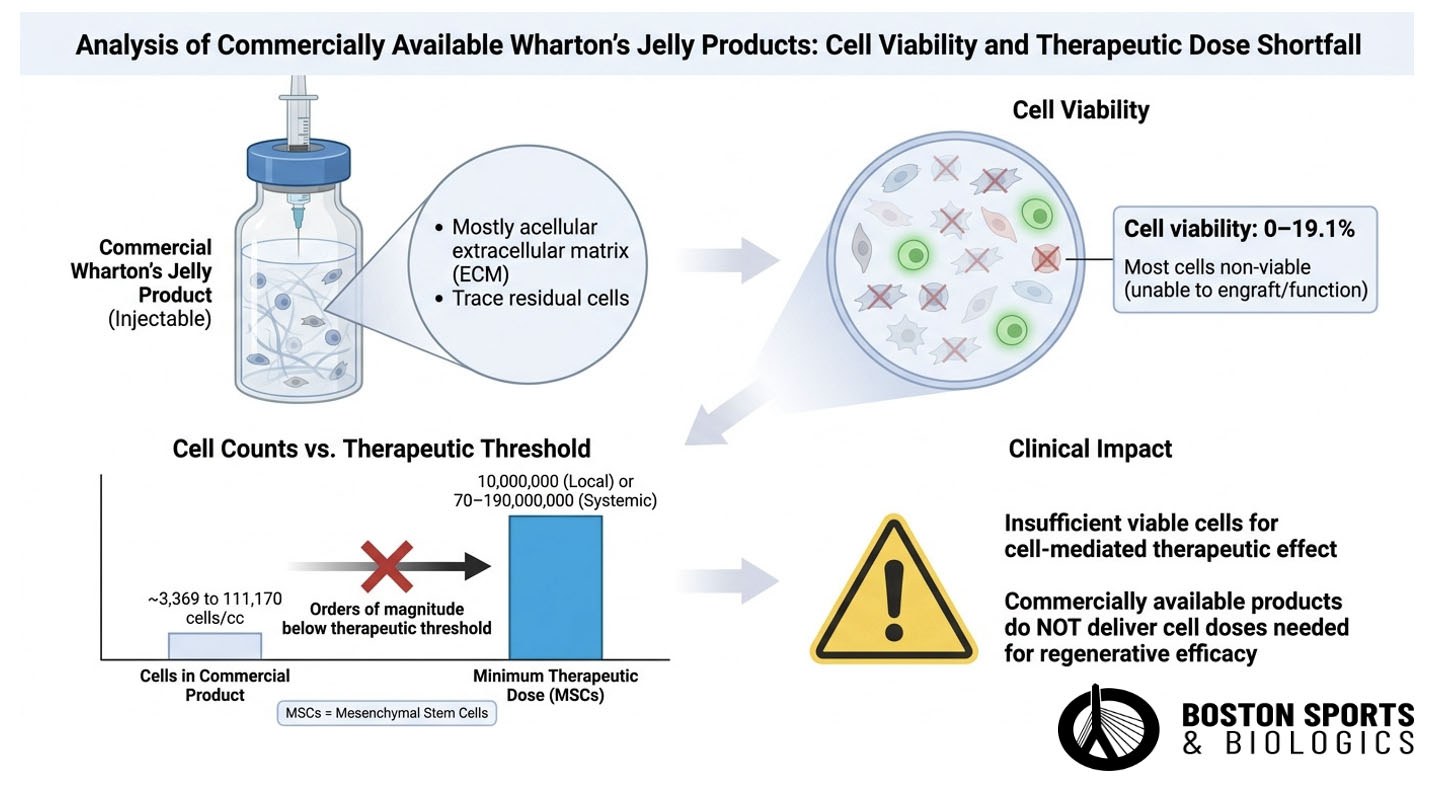
Many advertisements suggest that Wharton's Jelly injections contain millions of living "stem cells" capable of regenerating damaged tissue.
The scientific reality appears substantially different.
Commercial Wharton's Jelly products evaluated in laboratory testing contained cell numbers that were orders of magnitude lower than these therapeutic doses.
As a result, patients may be paying for products marketed as stem-cell treatments that are unlikely to function as true stem-cell therapies.
Possibly. Wharton’s jelly ECM is a rich, hydrated scaffold composed primarily of collagens, proteoglycans, and glycosaminoglycans. The ECM also serves as a reservoir for growth factors and bioactive molecules, contributing to the tissue’s potential regenerative and trophic properties.
Just because a product does not contain therapeutic stem cell doses does not necessarily mean it has no biological effect. However, the presence of these materials should not be confused with stem cell therapy.
Current evidence suggests that any potential benefit is more likely related to extracellular matrix components rather than stem-cell mediated tissue regeneration.
If you are considering Wharton's Jelly, exosome, or umbilical cord-derived products, ask:
Any provider should be able to answer these questions transparently.
No. The FDA has not approved Wharton's Jelly products for treating arthritis, tendon injuries, back pain, neurologic disease, or most other commonly advertised indications.
Native Wharton's Jelly tissue contains stem cells. However, studies evaluating commercially available products have found very low numbers of viable stem cells and little evidence that they contain therapeutically meaningful cell doses.
Regulatory requirements vary by product and indication. Autologous platelet-rich plasma (PRP) generally falls under a different regulatory framework because it uses a patient's own blood processed and reinjected during the same procedure.

(781) 591-7855
20 Walnut St
Suite 14
Wellesley MA 02481
How safe are PRP injections for knee arthritis? A recent study found that PRP has similar side effects to hyaluronic acid and steroid injections, with temporary post-injection pain being the most common reaction.
Read MoreKnee arthritis isn't just about cartilage. Bone marrow lesions in the bone beneath the cartilage may contribute to pain with walking, standing, and stairs. Learn what these MRI findings mean and why their location
Read More