Email: info@BSBortho.com

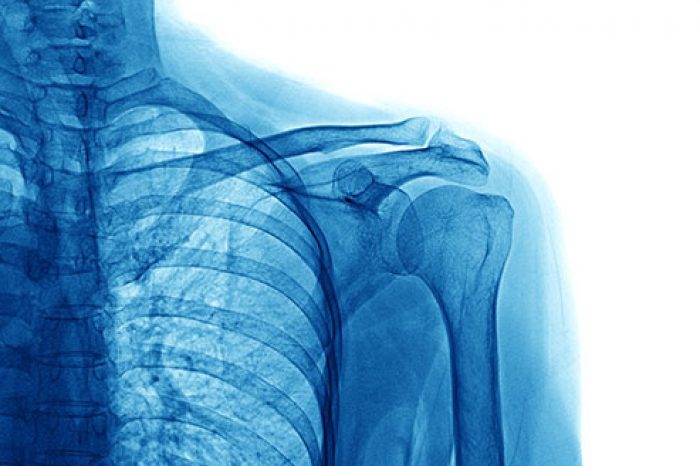
SIRVA has indeed gained increasing attention following widespread vaccination campaigns, particularly during the COVID-19 pandemic. The term was introduced in 2010 by the Vaccine Injury Compensation Program after an increase in claims filed for vaccine-related shoulder injury, and claims of shoulder injury now account for half of all claims to the Vaccine Injury Compensation Program (Belluck & Abelson, 2022).
The evidence strongly supports that SIRVA is not just "post-shot soreness" but rather a distinct musculoskeletal injury. Learn more about SIRVA here.
SIRVA is characterized by persistent shoulder pain and limited range of motion presenting within 48 hours of vaccination in individuals with no prior history of pain, inflammation, or dysfunction of the affected shoulder before vaccine administration (Wiesel & Keeling, 2021; Macomb et al, 2020; Janssen et al, 2023). Patients typically present with severe pain and limited range of motion and may experience notable functional limitations (Wiesel & Keeling, 2021).
The rapid onset of pain and limited range of motion in a previously asymptomatic shoulder is a key diagnostic criterion (Atanasoff et al, 2010).
SIRVA is thought to result from improper injection into anatomic structures adjacent to the deltoid muscle (subdeltoid bursa or shoulder joint), leading to mechanical and chemical trauma augmented by an inflammatory immune response to the vaccine and/or adjuvants (Bass & Poland, 2022; Yuen et al, 2022).
No Prior Shoulder Pain: By definition, SIRVA occurs in individuals with no prior history of pain, inflammation, or dysfunction of the affected shoulder before vaccine administration.
The structures you list are well-documented as the primary sites of injury:
Atanasoff S, Ryan T, Lightfoot R, Johann-Liang R. Shoulder injury related to vaccine administration (SIRVA). Vaccine. 2010 Nov 29;28(51):8049-52. doi: 10.1016/j.vaccine.2010.10.005. Epub 2010 Oct 16.PMID: 20955829.
Bass JR, Poland GA. Shoulder injury related to vaccine administration (SIRVA) after COVID-19 vaccination. Vaccine. 2022 Aug 12;40(34):4964-4971. doi: 10.1016/j.vaccine.2022.06.002. Epub 2022 Jun 8. PMID: 35817645; PMCID: PMC9174179.
Belluck P, Abelson R. Vaccine injury claims are few and far between. Available at: https://www.nytimes.com/2019/0... claims.html. Accessed February 7, 2022.
Fortier LM, Smith KL, Ina JG, Sinkler MA, Calcei JG, Salata MJ, Gillespie R, Voos JE. Common characteristics of shoulder injury related to vaccine administration following COVID-19 vaccination: a comprehensive systematic review. J Shoulder Elbow Surg. 2024 Jan;33(1):202-209. doi: 10.1016/j.jse.2023.07.040. Epub 2023 Sep 3. PMID: 37660886.
Janssen ERC, van Montfoort AZ, Hollman F, Lambers Heerspink FO. The prevalence and clinical course of shoulder injury related to vaccine administration (SIRVA) after COVID-19 vaccines in Dutch hospital workers. Vaccine. 2023 Sep 22;41(41):6042-6047. doi: 10.1016/j.vaccine.2023.08.043. Epub 2023 Aug 25. PMID: 37635003.
Hesse EM, Atanasoff S, Hibbs BF, Adegoke OJ, Ng C, Marquez P, Osborn M, Su JR, Moro PL, Shimabukuro T, Nair N. Shoulder Injury Related to Vaccine Administration (SIRVA): Petitioner claims to the National Vaccine Injury Compensation Program, 2010-2016. Vaccine. 2020 Jan 29;38(5):1076-1083. doi: 10.1016/j.vaccine.2019.11.032. Epub 2019 Nov 23. PMID: 31771864; PMCID: PMC9169064
MacMahon A, Nayar SK, Srikumaran U. What Do We Know About Shoulder Injury Related to Vaccine Administration? An Updated Systematic Review. Clin Orthop Relat Res. 2022 Jul 1;480(7):1241-1250. doi: 10.1097/CORR.0000000000002181. Epub 2022 Mar 24. PMID: 35323136; PMCID: PMC9191332.
Macomb CV, Evans MO, Dockstader JE, Montgomery JR, Beakes DE. Treating SIRVA Early With Corticosteroid Injections: A Case Series. Mil Med. 2020 Feb 12;185(1-2):e298-e300. doi: 10.1093/milmed/usz269. Erratum in: Mil Med. 2020 Feb 12;185(1-2):e325. doi: 10.1093/milmed/usz452.. Dockstater, Jo E [corrected to Dockstader, Jo E]. PMID: 31621851.
Martín Arias LH, Sanz Fadrique R, Sáinz Gil M, Salgueiro-Vazquez ME. Risk of bursitis and other injuries and dysfunctions of the shoulder following vaccinations. Vaccine. 2017 Sep 5;35(37):4870-4876. doi: 10.1016/j.vaccine.2017.07.055. Epub 2017 Jul 31. PMID: 28774564.
Wiesel BB, Keeling LE. Shoulder Injury Related to Vaccine Administration. J Am Acad Orthop Surg. 2021 Sep 1;29(17):732-739. doi: 10.5435/JAAOS-D-21-00021. PMID: 34185028.
Yuen WLP, Loh SYJ, Wang DB. SIRVA (Shoulder Injury Related to Vaccine Administration) following mRNA COVID-19 Vaccination: Case discussion and literature review. Vaccine. 2022 Apr 20;40(18):2546-2550. doi: 10.1016/j.vaccine.2022.03.037. Epub 2022 Mar 21. PMID: 35339304; PMCID: PMC8934720.
How safe are PRP injections for knee arthritis? A recent study found that PRP has similar side effects to hyaluronic acid and steroid injections, with temporary post-injection pain being the most common reaction.
Read MoreKnee arthritis isn't just about cartilage. Bone marrow lesions in the bone beneath the cartilage may contribute to pain with walking, standing, and stairs. Learn what these MRI findings mean and why their location
Read More